




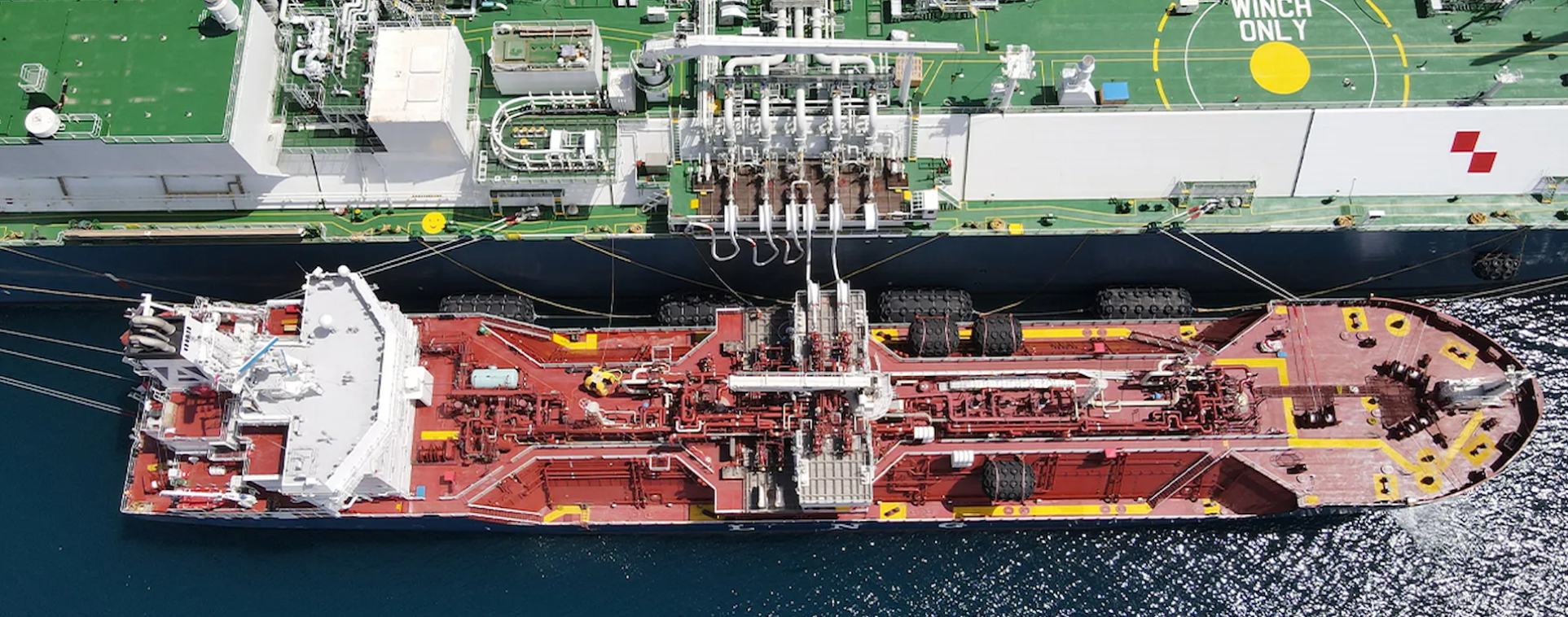
 The global LNG bunker vessel fleet may need to more than double by 2030 to between 165 and 208 ships as LNG-fuelled tonnage expands faster than bunkering capacity, according to a DNV study.
The Norwegian classification society published the forecast on 7 September in its white paper Gas bunker vessels: facilitating the transition to alternative fuels.
“LNG-fuelled shipping is growing faster than the bunkering network needed to support it,” said Martin Cartwright, DNV Maritime’s global business director for gas carriers and FSRUs.
DNV warned that fuel availability could constrain further LNG adoption without additional investment across the bunkering value chain. There are 67 LNG bunker vessels in operation and another 47 on order, including seven ordered in the first half of 2026.
The LNG-capable merchant fleet, excluding LNG carriers, stands at about 900 vessels in operation, with roughly 650 more on order for delivery through 2030. LNG consumption by LNG-fuelled ships increased by more than 500% between 2020 and 2024.
DNV said LNG is the most widely adopted gaseous marine fuel and the first to reach large-scale commercial deployment as shipowners face tighter environmental requirements and pressure to cut greenhouse gas emissions.
The study examines bunker vessel design, regulation, ship-to-ship transfers, safety management and crew competence. DNV also sees scope to increase supply capacity by converting suitable small-scale LNG carriers, subject to equipment, redundancy and safety requirements for ship-to-ship bunkering.
DNV Maritime chief executive Cristina Saenz de Santa Maria said the transition to alternative fuels would also depend on infrastructure, supply chains and operational capabilities. Infrastructure and operating experience developed for LNG could support liquefied biomethane, synthetic methane and, in some applications, ammonia.
DNV is an independent assurance and risk-management group headquartered in Oslo, Norway. Its origins date to 1864, when Det Norske Veritas was established by Norwegian marine insurance clubs. The group operates in more than 100 countries.