




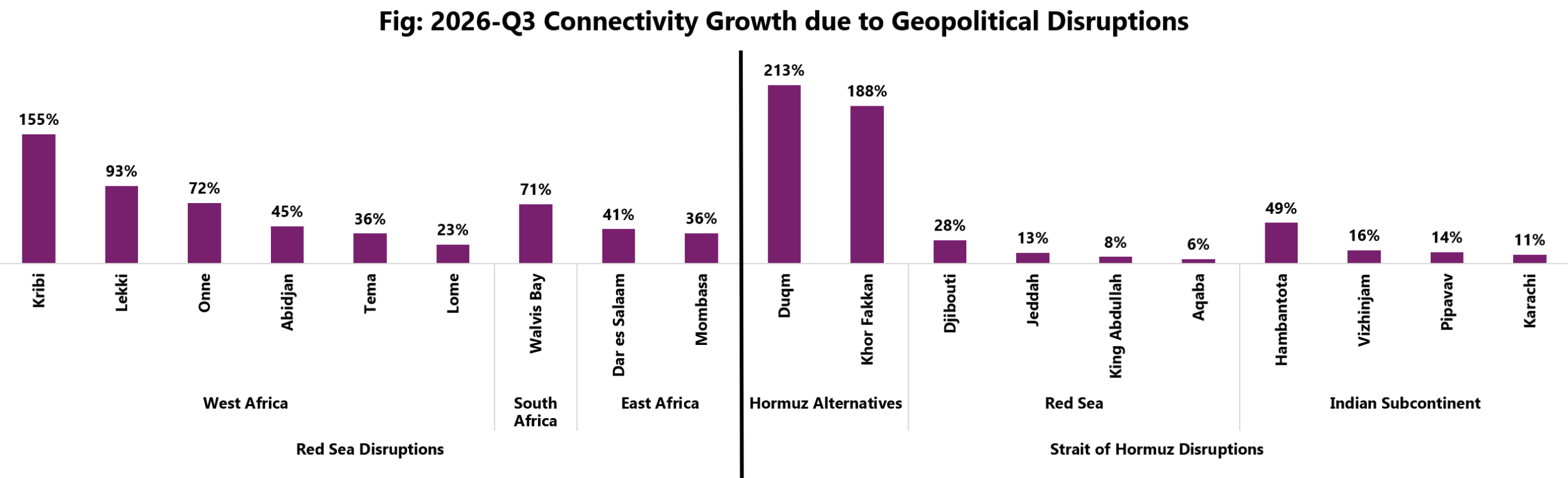
 Liner connectivity at Oman’s Duqm port jumped 213% after the closure of the Strait of Hormuz forced shipping lines to redesign networks across the region, according to Sea-Intelligence.
Khor Fakkan, on the Gulf of Oman, recorded a 188% increase against its pre-crisis baseline as ports outside the affected area absorbed services and cargo displaced from established routes.
The figures are based on UNCTAD’s Port Liner Shipping Connectivity Index for the third quarter of 2026.
Sea-Intelligence compared the results with the first full quarter before each disruption began: the third quarter of 2023 for the Red Sea disruption and the fourth quarter of 2025 for the Strait of Hormuz closure.
Longer transit times for vessels serving the Central and Eastern Mediterranean through the Strait of Gibraltar have also pushed African relay operations further south along the Atlantic coast, increasing connectivity at West African ports.
Walvis Bay has become an alternative to congested Durban for Asia-Europe vessels sailing around Africa. Ports in East Africa and the Indian Subcontinent have also handled displaced regional cargo as shipping lines sought to avoid the affected area, supporting connectivity gains at Dar es Salaam and Hambantota.
Sea-Intelligence operates through Sea-Intelligence ApS in Denmark and Sea-Intelligence Pte Ltd in Singapore and provides research, data and advisory services focused on container shipping and global supply chains.