




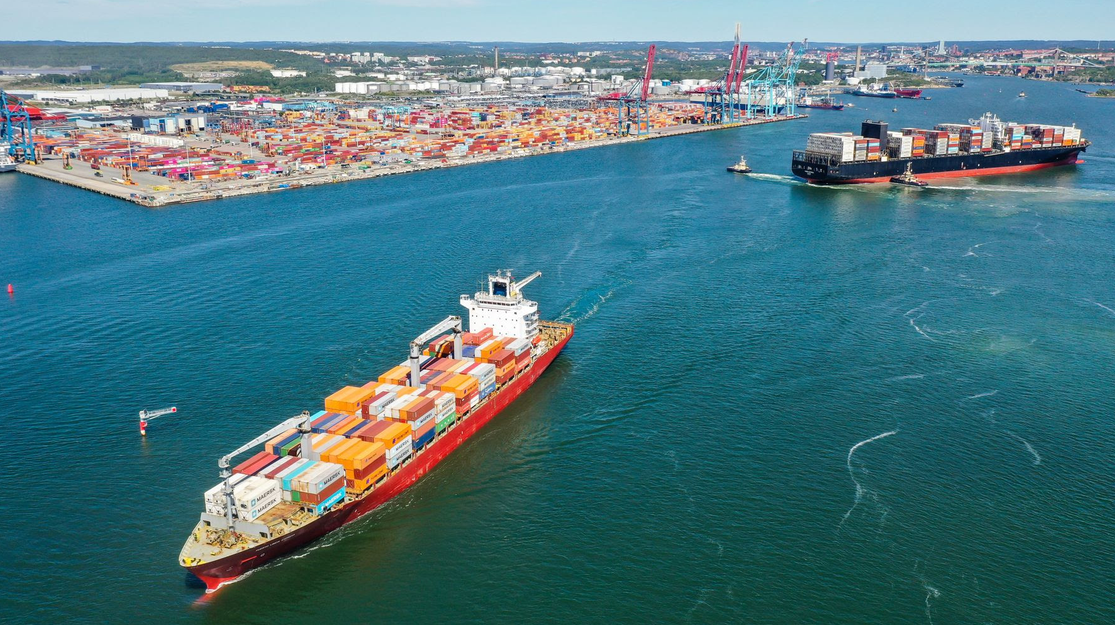
 Container throughput at Sweden’s Port of Gothenburg stood at 698,000 TEU in the first nine months of 2026, almost unchanged from 699,000 TEU a year earlier, according to a port statement. Laden container volumes increased 2%, while empty-container handling fell 11%. Imports of laden containers rose 7%, while exports declined 1%.
“Overall, we are seeing stable development across all cargo segments in a market situation that remains difficult to assess. Cargo volumes are increasing in all segments, which shows that the port continues to be a strong and reliable freight hub for Swedish foreign trade,” said Claes Sundmark, Vice President Sales & Marketing at the Port of Gothenburg.
Rail volumes rose 2% to 403,000 TEU from 396,000 TEU. Around 60% of containers handled at Gothenburg are transported by rail to or from inland destinations, with traffic again heading for a record year.
“The port’s rail system, Railport Scandinavia, is a crucial part of the port’s offering. It strengthens the competitiveness of Swedish industry by connecting import and export regions across the country with the port’s broad range of maritime services, and doing so in an efficient and sustainable way,” Sundmark said.
Intra-European ro/ro volumes increased 2% to 405,000 units from 396,000 units, with both imports and exports contributing to the increase. New-car handling jumped 14% to 197,000 vehicles from 172,000 a year earlier. Exports increased 10%, while imports rose 29%. Energy-product volumes increased 10% to 16.5m tonnes from 15.1m tonnes. Exports rose 15% and imports 4%. Dry bulk and breakbulk handling increased 1% to 266,000 tonnes from 264,000 tonnes, driven mainly by pulp handled as breakbulk before onward export in containers. Passenger traffic was broadly unchanged at 1.14m passengers compared with 1.146m a year earlier, while cruise calls fell 27% to 40 from 55.
The Port of Gothenburg is a Swedish municipal port company operating Scandinavia’s largest port. It handles around 20% of Sweden’s foreign trade and more than half of the country’s container traffic. Its cargo segments include containers, vehicles, ro/ro units and energy products, while its Railport Scandinavia system connects the port with inland terminals across Sweden and Norway through more than 30 daily rail shuttles.